
Peptide Reconstitution
Resource Center
Why Peptides Arrive Lyophilized
Peptides are highly sensitive molecules. To ensure stability during shipping and long-term storage, they are typically supplied in a lyophilized (freeze-dried) form. Removing water protects peptide integrity, slows degradation, and makes storage more reliable.
Before use in research, peptides must be reconstituted — restored to a solution state using a suitable medium. This step is fundamental because dry peptides cannot participate in experimental systems until they are dissolved.

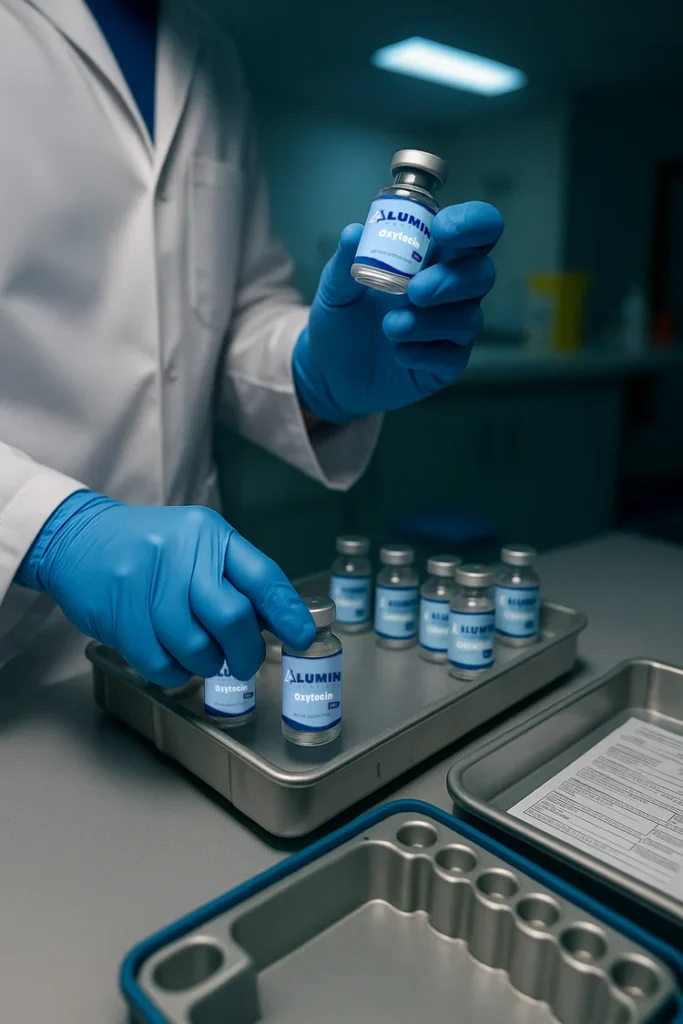
Conceptual Overview of Reconstitution
Reconstitution Calculator
Disclaimer: The calculator is for conceptual planning only. It does not replace vendor datasheets, institutional SOPs, or supervisor instructions.
Publications & Resources
For researchers seeking further context on peptide stability and handling, here are selected educational resources:
- Peptide Stability in Solution – Review Article (PubMed)
- Principles of Lyophilization in Biopharmaceuticals – University of Connecticut PDF
- Overview of Peptide Handling Best Practices – ThermoFisher Resource
These resources are for general background only. Lumin does not endorse or validate external protocols.
Compliance Reminder
Lumin Peptides is committed to transparency, education, and compliance. This page is provided to support conceptual understanding, not to supply laboratory instructions.
Always defer to:
- The vendor's datasheet & COA
- Institutional SOPs
- Supervisor or compliance office approval
Only these sources provide valid, approved reconstitution protocols.